
Cloud POS vs Traditional POS: Which One Fits Your Business Best?
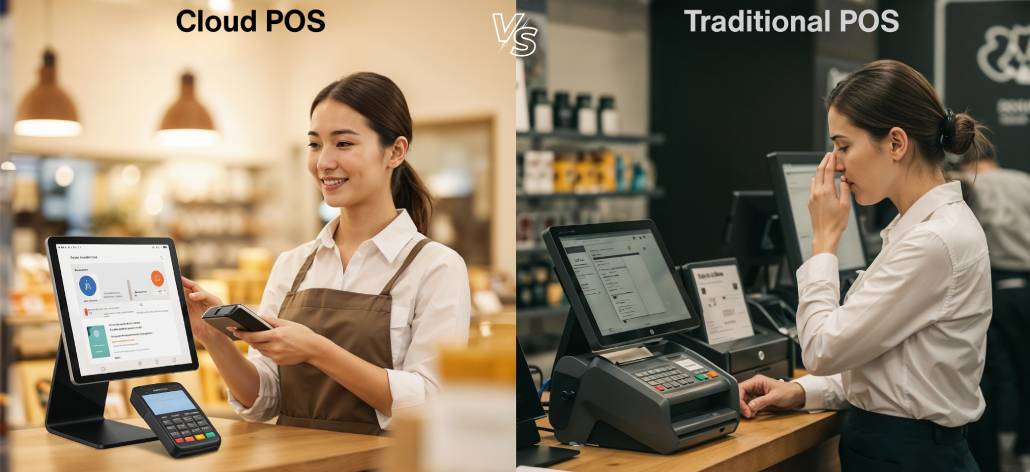
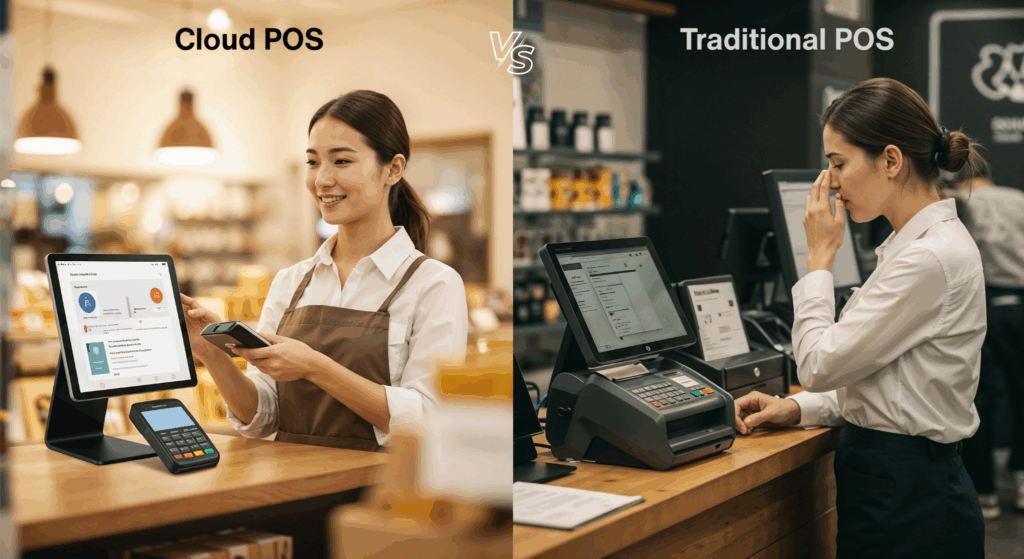
The world of Point of Sale (POS) systems has changed significantly, and business owners now face an important decision: Cloud POS or Traditional POS. As we approach 2025, this choice is more crucial than ever for the success of your business.
Understanding Traditional and Cloud POS Systems
Traditional POS systems work through on-site servers, which means they need physical hardware installations and store data locally. For many years, these systems have been the backbone of retail and restaurant operations, providing reliable performance in a limited environment.
On the other hand, Cloud POS systems are the digital advancement of payment processing. These systems keep data on remote servers, enabling you to access your business information from anywhere with an internet connection. This technology allows for smooth integration with modern business tools and offers real-time updates across multiple locations.
Why Your Choice Matters
The type of POS system you select in 2025 will significantly impact multiple aspects of your business operations. Your choice directly influences operational efficiency, determining how smoothly your daily processes run and how effectively your staff can serve customers. The quality of customer service you provide depends heavily on your POS system’s capabilities, affecting everything from transaction speed to payment flexibility.
Data security measures become increasingly important as cyber threats evolve, making your POS system selection a critical component of your overall security strategy. Business scalability options are largely determined by your POS infrastructure, influencing your ability to expand operations, add new locations, or introduce additional services. Furthermore, financial management capabilities vary significantly between different POS systems, affecting your ability to track performance, manage inventory, and make data-driven decisions.
The right POS solution can streamline operations, boost sales performance, and provide valuable insights into business performance metrics. Conversely, selecting an inappropriate system may limit growth potential and create unnecessary operational obstacles that hinder your business development.
Evolution of POS Systems
The retail industry has witnessed remarkable transformation in POS technology over the past decade. Traditional on-premises POS systems, which have been operational cornerstones since the 1970s, relied extensively on local servers and substantial physical infrastructure. These systems demanded significant hardware investments and required regular maintenance from specialized IT professionals, often resulting in substantial ongoing costs.
The introduction of cloud-based POS systems revolutionized retail business operations by eliminating the need for expensive on-site servers. This technological advancement replaced costly local infrastructure with remote data centres accessible through standard internet connections. Modern retailers now require systems capable of handling multiple payment methods, providing real-time inventory tracking, managing customer relationships effectively, and enabling seamless cross-platform integration.
Key Differences Between System Types
The fundamental distinctions between traditional and cloud POS systems extend beyond simple operational differences. Data storage approaches differ significantly, with traditional systems relying on single local servers while cloud systems utilize multiple remote servers with automatic backup capabilities. This difference affects both data security and accessibility, with cloud systems offering superior protection against hardware failures and data loss.
System updates present another crucial difference in operational efficiency. Traditional POS systems require manual updates involving technician visits and potential downtime, while cloud systems receive automatic updates seamlessly delivered through internet connections. This distinction affects both operational continuity and security, as cloud systems can implement security patches and feature updates without disrupting business operations.
Hardware requirements represent a significant operational and financial consideration. Traditional systems necessitate dedicated terminals and specialized equipment, while cloud systems demonstrate compatibility with various devices including tablets and smartphones. This flexibility enables businesses to optimize their hardware investments while maintaining operational efficiency.
Advantages of Cloud-Based POS
Cloud-based POS systems bring powerful capabilities to modern businesses through their innovative features and flexibility. Remote access stands out as a game-changing advantage – you can monitor sales, check inventory, and analyze data from anywhere with an internet connection. This proves invaluable for business owners managing multiple locations or traveling frequently.
Key Benefits of Cloud POS:
- Real-time Data Access: Sales reports and analytics, employee performance tracking, customer behavior insights, and inventory levels across locations.
- Seamless Integration: Direct connections with popular delivery platforms (DoorDash, Uber Eats), online ordering systems, kitchen display systems, and accounting software.
- Enhanced Customer Experience: Tableside ordering and payment processing through mobile transactions, reducing errors and increasing efficiency.
- Effortless Multi-location Management: Synchronization of data across all business locations for tracking inventory transfers, comparing performance metrics, managing menu updates centrally, and monitoring staff.
- Proactive Inventory Management: Automated tracking features that alert you when stock runs low and generate purchase orders based on preset thresholds to minimize stockouts and prevent overordering.
Reliability and Security Comparison
Traditional POS systems face inherent vulnerabilities due to their reliance on local servers, making them susceptible to hardware failures and potential data loss. Single points of failure, such as power outages or system crashes, can completely halt business operations, potentially resulting in significant revenue loss and customer dissatisfaction.
Cloud-based POS systems excel in reliability through automatic data backup systems that ensure information safety through continuous cloud synchronization. Offline mode capabilities maintain operations during internet disruptions, while server redundancy prevents system-wide failures that could impact business continuity.
Security features in cloud POS systems include end-to-end encryption for customer data protection, PCI DSS compliance meeting strict payment security standards, real-time fraud detection providing immediate alerts for suspicious activities, and regular security updates delivering automatic patches for emerging threats. Traditional systems often lack these advanced security measures, requiring manual updates and additional security software investments.
The built-in redundancy of cloud systems typically achieves 99.9% uptime reliability, while traditional POS systems generally achieve 95-97% reliability rates. This difference translates to several additional days of uninterrupted operation annually, directly impacting revenue potential and customer satisfaction.
Cost Analysis
When deciding between cloud and traditional POS systems, it’s important to consider the financial aspects beyond just the initial setup costs.
Traditional POS Systems Costs
Traditional POS systems require a significant upfront investment:
- Hardware costs: $2,000-$5,000 per terminal
- Software licenses: $1,500-$3,000 one-time fee
- Installation and training: $500-$1,500
Cloud-based POS Systems Costs
Cloud-based POS systems have a different cost structure:
- Monthly subscription: $50-$100 per terminal
- Minimal hardware requirements: $300-$800 per device
- Free software updates and remote support
2025 Technology Cost Trends
In 2025, we can expect the following technology trends to impact costs:
- AI-powered analytics integration
- Contactless payment systems
- Biometric authentication features
- Enhanced cybersecurity measures
Businesses expanding operations face additional hardware expenses with traditional systems for each new location, while cloud solutions accommodate growth through simple subscription adjustments. This scalability difference becomes increasingly important as businesses develop and expand their operations.
Implementation and Effectiveness
Cloud-based POS system implementation typically requires 24-48 hours with minimal disruption to daily operations. The setup process includes automatic daily backups of transaction data, real-time synchronization across devices, instant recovery options during system failures, and multiple backup locations for enhanced security protection.
Scalability features adapt seamlessly to business growth by enabling new location additions without hardware installations, instant user license increases, menu item and inventory category expansions, and on-demand integration of additional payment methods. This flexibility supports business development without requiring significant infrastructure investments or operational disruptions.
Effectiveness manifests through flexible deployment options that allow businesses to start with basic features and gradually activate advanced functionalities as operational needs evolve. Table management expansion, kitchen display system integration, customer loyalty program additions, advanced inventory tracking, and multiple terminal connectivity can be implemented progressively based on business requirements and budget considerations.
Remote server architecture enables seamless updates and maintenance without requiring on-site technician visits. Systems remain current with latest features and security patches through automatic updates, ensuring consistent performance across all business locations while minimizing operational disruptions and maintenance costs.
Conclusion
The decision between cloud and traditional POS systems in 2025 depends on specific business requirements and operational objectives. Cloud POS is ideal for growing businesses with multiple locations, offering flexibility, seamless integration, scalability, and advanced features that support future expansion and flexible payment options. In contrast, traditional POS is better suited for smaller, stable businesses operating from a single location, providing basic functionality and a one-time investment.
Ultimately, the choice of POS system should align with a business’s growth trajectory and future expansion plans. Cloud POS supports current efficiency and future development, while traditional POS ensures consistent operations for businesses with less complex requirements. The decision hinges on whether a business prioritizes adaptability and advanced features for growth or prefers a more straightforward, foundational system.