
Augmented Reality and the Retail Sector
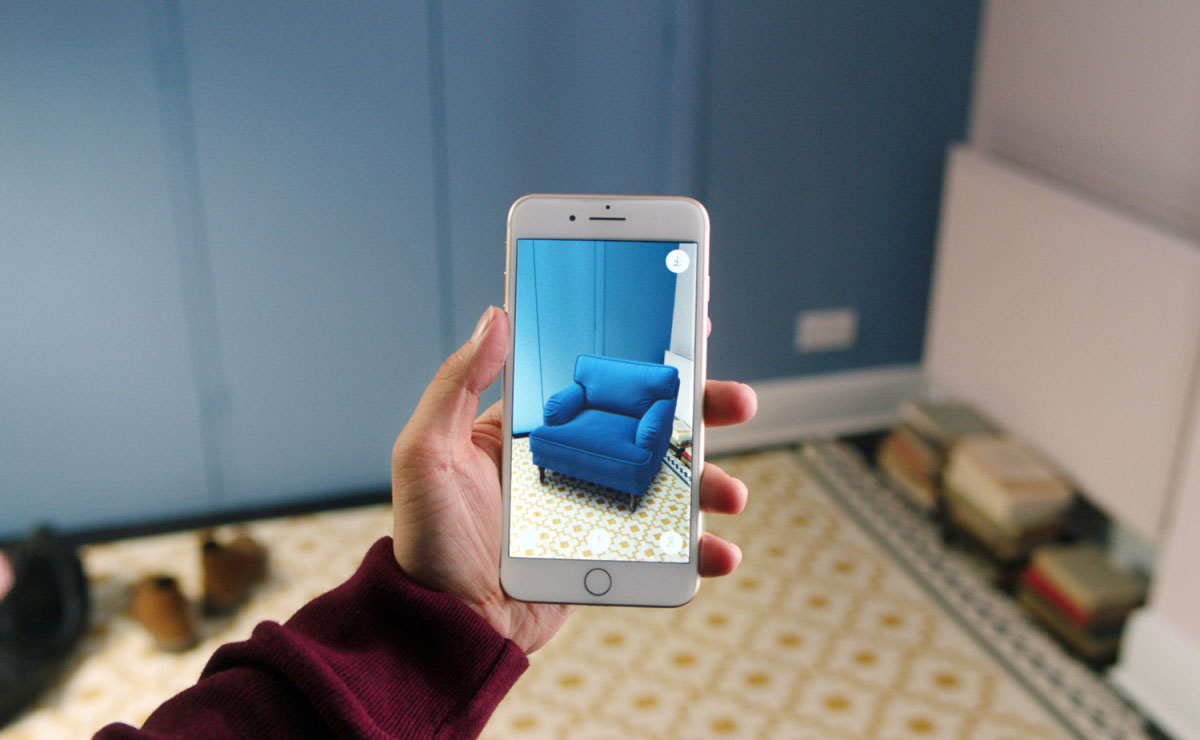
Augmented reality, or AR as it is more commonly known, first began to really impress its possibilities on to us with the arrival of the Pokémon Go app, back in the summer of 2016. It has been filtering into many areas of modern life ever since. Many people don’t realise that they are even using AR, for example ever-popular Snapchat filters are a perfect example of augmented reality. Now the heightened engagement and interaction that AR provides is being implemented in the retails sector where it enables brands to create a truly enhanced customer experience.
What is AR and how does it work?
The word ‘augment’ means to add to enhance something. In the case of AR, the augmentation takes the form of adding computer-generated sounds, graphics and touch feedback and super-imposing it over our view of the natural world. In doing so, it enables users to unlock more information and heighten their experience of the real world.
AR is not to be confused with virtual reality, or VR, in which the customer submerses themselves in an entirely virtual environment though sound and vision. VR is particularly popular for creating a highly realistic experience for players of video games and those watching 3D movies. It can also be used to enhance training for real-life situations, for example, as a flight simulator for pilots in training before they are allowed to actually attempt to fly a plane. VR is typically achieved by wearing a headset with earphones.
Customer expectations
Customers’ expectations are ever-evolving, but there’s no arguing that they want and expect more than ever from their shopping experience. There are three main areas in which AR technology can help brands to not only meet but surpass customer expectations and deliver a truly omnichannel customer experience. These are:
- Providing information. The biggest reason that most customers use their smartphones in a bricks-and-mortar store is to get further information before they make a purchase. This can include performing price comparisons and checking out product reviews. AR can enable easier access to the information that your customers need to complete their pathway to purchase.
- Personalization. We live in a time when every shopper demands a highly-personalized experience. This means receiving valuable information based on their unique needs. AR apps can enable retailers to implement individualized in-store experiences, such as seen in the examples listed later in this post.
- Greater customer satisfaction and brand loyalty. AR helps customers to make the right choices by providing the information they need, such as real-time availability, product knowledge and smart recommendations. When customers are satisfied with their purchases and the buying experience, they are more likely to become loyal to your brand.
Benefits of using AR in the retail sector
So, what can AR do for your retail business? Many big brands have already caught on to the benefits that utilizing augmented reality can provide.
- Allowing customers to use a medium that they are already comfortable with, such as their tablet or cell phone, on a level that offers them greater ways to engage with the brand.
- As mobile and personal, AR is accessible to everyone with a smartphone.
- Shows customers that the brand is innovative, forward-thinking and is prioritizing the customer experience.
- AR appeals to the millennial and next-gen markets, who place greater value on experience.
- Additional brand content – videos, music etc. – is more easily activated.
- Research has shown that AR increases the perceived value of products and brands.
- AR is also inexpensive when compared to other media platforms, as no specific media needs to be purchased.
- AR helps to enhance the in-store experience and build a definitive link between bricks-and-mortar and digital stores.
- It is also an effective way to bring the in-store experience to life in the comfort of your own home (see the IKEA example that follows).
- Retailers can use AR to display more stock and stock variations than is possible to fit into their physical store.
- AR can help you to collect more information about your customers, a valuable resource than can be used in conjunction with a high-performing POS system (such as Hike) to deliver more personalized and enticing loyalty programs, and individualized rewards.
Examples of AR in the retail sector
Forbes reports that by the end of 2018, more than 69% of customers expect AR apps from their favorite retailers. However, many big brands are already using the technology with great success. To help you plan an effective AR strategy, we have found some of the best examples of augmented reality in both the ecommerce and bricks-and-mortar stores around the world.
Converse
This bumper brand has created the Converse Shoe Sampler app which utilizes AR to enable customers to see what any of their popular shoes look like on their own feet, but anytime and anywhere. They simply download the app, select the shoe that they wish to ‘try on’ and hold their smartphone camera over their foot. AR does the rest. However, not content with leaving the experience there, Converse has made it possible for customers to save the image, and then share it to their various social media accounts. This enables them to seek the opinion of their friends and followers, and gives the brand additional, valuable social media exposure.
IKEA
The masterminds at IKEA understand how difficult it can be to try and visualize how new furniture will look in your home. Until recently, the frustration of taking accurate measurements of your rooms and trying to apply them was the only way to buy sofas, sideboards, wardrobes and other similar products for your home. However, the IKEA catalogue app – Create Your Space – makes seeing exactly what your potential buys may look like a piece of cake. Customers look through their phone screen and see their rooms, and superimposed over them via AR technology, is a life-size 3D image of the products they have selected. Shoppers can even walk around and visualize each piece of furniture from different angles, which empowers their decision-making. Most people who have used the app agree that it makes the process of choosing and buying furniture much easier and more fun.
American Apparel
Most retailers know that greater depth of information about their products helps customers make a decision about what to purchase. American Apparel have found a way of giving customers a range of important data about their products through their Shopping Assistant App, which tells them what colors and sizes are available, access online reviews and even share the item on social media. However, rather than having to scan a special bar code, the app uses AR technology to scan products on the rack. This example from American Apparel shows how AR can be used to successfully blend brick-and-mortar with the benefits of eCommerce and deliver a seamless, omnichannel experience.
Sephora
Sephora have taken the idea of trying on cosmetics to a whole new level with their new app, Sephora Visual Artist. This clever bit of AR technology scans your face, figures out where your eyes and lips are, and then lets you ‘use’ some of their key products on your face. Ever wondered what their Royal Raspberry Color Last Lipstick will look with your skin tone? Now you can find out before you commit to purchase. You can also play around with eyeshadows and false lash styles to see what suits you best. In addition to letting you ‘try before you buy’, those with the Sephora app can also benefit from unique virtual tutorials. These show you how to contour, apply highlighter and create winged eyeliner through an overlay on your own face – which is infinitely preferable than seeing it on a model with completely different bone structure.
Including augmented reality in your retail strategy
Programming AR apps does take some specialized knowledge and you will need to find the right software partner. However, it is important to understand that the best augmented reality solutions don’t have to have the most features, but what they do to, they need to do well. Here are a few top tips.
- Ensure that you build a fun app that isn’t too complicated and that your customers will enjoy using.
- Shareability is almost as important as sales, so make sure your AR offering includes the option to link with the most popular social media platforms. This will help get your brand attention.
- Make the AR experience useful, as well as fun. Rather than just a ‘gimmick’ which customers will quickly get bored of, ensure that your AR experience makes their decision-making easier and more convenient. Many retailers combine AR with educational value (such as information about where they source their products), or with access to a version of their inventory, so that shoppers can see the full range of what is available to them.
- Make the most of your customer information. When your customers download your app, make sure you get key information from them including their name, location, age and email address. You can track how they have used your app and any purchases that they have made and use this to create intensely-personalized offers and experiences that make them feel valued.
There is no doubt that there is a lot of potential for retailers that use AR apps to drive up sales, individualized experiences and customer loyalty, and see a good return on their investment. As the development of AR continues to penetrate the retail world, we also expect to see an increase in the number of ways in which it integrates with POS systems. These developments will help merchants continue to meet the evolving and demanding expectations and thrive in a challenging retail landscape.