
What Sets Traditional & e-Commerce Sales Channels Apart?
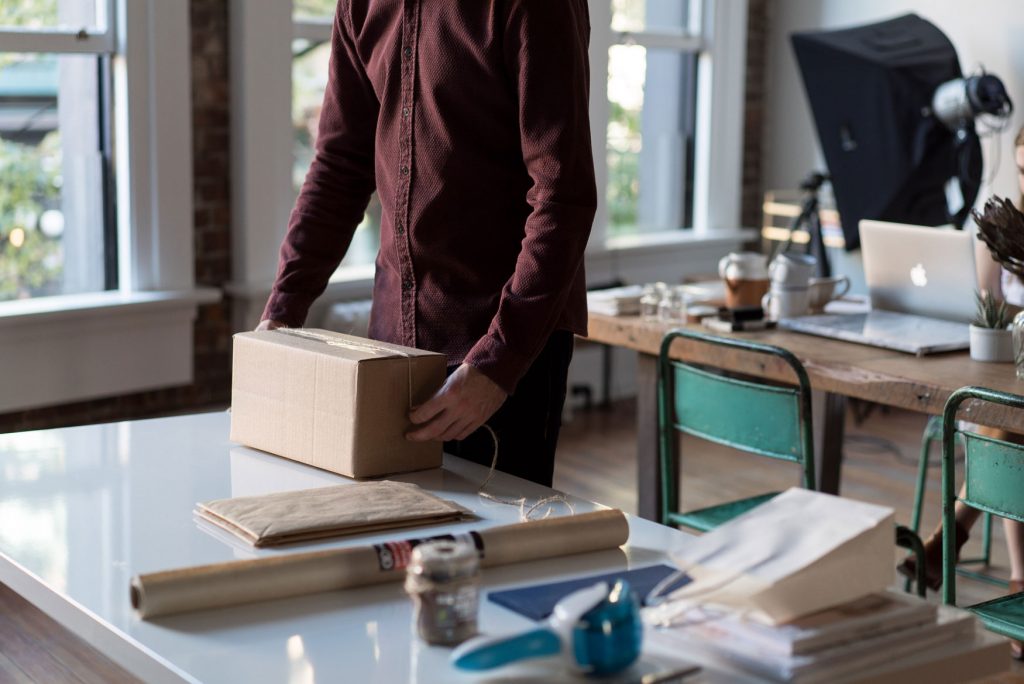
Understanding Sales Channels: 5 key differences between traditional commerce & e-Commerce sales channels
When considering the evolution of point-of-sale systems, commerce or just the retail industry in general, a common trend can be easily traced.
Technology
Or more specifically, the online tech industry which has forever changed the way retailers operate and think about their business to place themselves ahead of their competition.
We’re familiar with the change simply through the progression of point-of-sale systems, but the larger impact on the sector has been e-commerce. The rapid rise of online shopping, which in 2017 is a 2 trillion US dollar industry with many predicting double-digit growth through 2020, has taken its place alongside (and in some cases even surpassed) its more traditional commerce counterparts.
In this article, we’ll break down the key point of differences between the two sales platforms and how retailers should consider the various advantages of each, but also ways in which to utilize them together, to maximize the earning potential of your business. Commerce, as a system whereby goods or services are exchanged, has existed since prehistoric times. Indeed, the barter system, introduced to civilization millions of years ago, is in fact the genesis of where ‘traditional commerce’ stems from. Yes, the introduction of currency, the more sophisticated processes in which we transact and the products and services that are available, are of a vastly different nature than what we have today, but the principles have largely remained the same.
That principle being the practice of conducting face-to-face, or in-person sales, which as simplistic as it sounds, helps us clearly define what it is to say traditional commerce. We’ve all had physical interactions with a business, that requires us to visit a store and make a transaction where money is exchanged on the spot for goods or services.
It’s what has undoubtedly been a core tenant of the traditional commerce retail experience, and will continue to be for many years to come, but since the turn of the century, it has seen its position rivalled, and in some instances replaced entirely by its online equivalent, e-Commerce.
Through its ‘e’ identifier (which stands for electronics), e-Commerce represents the rising juggernaut that is, the online shopping market, and has seen the platform propel itself into something far more wide-reaching, in a way that traditional commerce could not be. It’s convenient, it’s user-friendly – as new technology is supposed to be – and it’s an industry that is only growing.
Although the two distinct sales channels represent widely different ways in which to conduct business, they are both becoming increasingly necessary to work in conjunction with each other.
1. Accessibility
The limitations of a brick and mortar store where traditional commerce takes place, are painstakingly obvious by name alone. Technology is moving fast, but not quite as fast as being able to transport stationary buildings around.
Where shopping in-store requires the customer to be able to get to the location of the store, ensure they are there during trading hours and make sure it all takes place at a time that is convenient for them, e-Commerce eschews all of that. A twenty-four, seven days a week online website has forever changed the way we think about retailing (order anytime, anywhere), and its enormous benefit for businesses looking to expand and grow in a cost-effective manner.
We’re talking about expanding the horizons of a store, simply beyond the geographic radius of its location, to extend nationally and even internationally. Customers ordering from Australia can buy from a store in the United States, and vice-versa. The prevalence of globalization has opened the floodgates in this regard, and no industry has done as well as to encapsulate that into the core of its business than e-Commerce.
However, there are ways in which physical stores can expand their market, though at a smaller scale, and that’s by opening new outlets and/or by putting your store on wheels. New technology has made way for solutions like an iPad POS system, which enables retailers to sell their products on the go, giving them a platform to sell at a pop-up shop and a way in which to expand their customer base, without using e-Commerce.
2. Personal Customer Service
For as imposing as the e-Commerce sales platform is, it doesn’t quite compare to being able to shop face-to-face with someone in a store, where you get a real-life human talking to you, who is able to provide great customer service. Trying to make head and tails of an entire store’s catalog on a website can be just as time consuming and require you to do heavy amount of leg-work to make sure that you’re buying the product that best suits your needs and wants.
A physical store, offers a personal touch that gets customers into the door and good experiences are a great way of ensuring that the customer comes back. With e-Commerce stores, there is no ‘sales pitch’ or the same kind of meaningful encounter. Description of a product, can quite simply not be enough and a bad online experience, would likely result in losing that customer for good.
Loyal customers to brick and mortar stores exists, because they know they are getting quality customer service from a business they trust, and we all know the key to great retailing is by building positive relationships.
There are ways in which online websites can improve their customer service however. Most notably seen in the form of an online chat support system, where customers can ask questions and get answers in real-time. Yet, this requires further investment into the online platform, one that may not have been budgeted in the initial expenditure, and generally will require employing extra, around the clock, staff to answer customers’ questions.
3. Scope of Products
A business that trades in traditional commerce, perhaps with just a single store, can be quite limiting, and not just because of its lack of accessibility to a wide-range of customers, but also with regards to what it can sell.
Brick & mortar stores are often associated with working with a set of products that are tried and tested with customers, but forgoes the option to introduce many new products because of the time and costs involved. Opening a new product line may take months, before you can reasonably gauge its reception from customers, and may not live up to the expectations you initially placed upon it.
This differs significantly from online shopping where vendors can easily introduce a new product on the website, market it as such and quickly ascertain a level of interest on the new items. Indeed, much of the e-commerce business models, relies heavily on marketing and ascertaining immediate interest, so by pushing a targeted campaign, your new products can be presented to your customers in a way that will catch their eye.
Where physical stores can do their best to compete through marketing and PR strategies, their customers won’t have the benefit of being able to immediately purchase the item – with no online store – thus being hamstrung by the limitations we’ve already established physical stores to have.
4. Cash Payments / Instant Transactions
This is one of the simpler differences between the two platforms, but it’s impact is quite considerable. Since we’ve been able to use currency, cash has always been a preferred option of payment for customers around the world. E-Commerce gives the option to pay using credit cards or online money transfers like PayPal, but does not allow for cash transactions (for obvious reasons).
This can be a sticking point for many, when it comes to low-monetary items where customers would much rather pay with notes than their credit card, which a physical store will most likely accept.
Even more than just being able to pay by cash however, is that purchasing a product in-store gives customers the advantage of being able to take that product with them as they leave the store. There are no shipping delays (or costs) involved and in instances where a product return needs to be actioned, the process is far simpler.
This is key trade-off between the traditional commerce / e-Commerce dynamic, where the latter gives the customer the ability to shop from anywhere but receive the item several days (or weeks if international shipment) later. There’s an instant satisfaction to purchasing a product in-store, that can be viewed as a reflection of our love for shopping. But perhaps more immediately, if you’re in the need for some last-minute gift items, trying to buy it online will just not cut it.
5. Growing Trends
Giant corporations like Amazon and eBay have led the way in switching modern consumerism trends head first into e-Commerce. In this modern age of online shopping, more and more businesses – small and large, are using an e-Commerce platform to make online sales in conjunction with their physical stole retailing. It is made easier when point-of-sale systems, like Hike, can integrate seamlessly with leading e-Commerce applications like BigCommerce, Shopify and WooCommerce, so that all sales and inventory are connected, in real-time, with both sales channels.
As we mentioned at the top, the growth of e-Commerce is substantial and positioning a business to work in that platform is increasingly becoming a necessity, not just a luxury. Indeed, e-Commerce’s international prominence solidifies that position even more.
In a list of the top 10 e-Commerce markets in the world, Business.com ranks them as:
- China – $672 billion
- United States – $340 billion
- United Kingdom – $99 billion
- Japan – $79 billion
- Germany – $73 billion
- France – $43 billion
- South Korea – $37 billion
- Canada – $30 billion
- Russia – $20 billion
- Brazil – $19 billion
With new and existing markets being continuously created and expanding across the globe, the benefits for both retailer and customer are potentially limitless. It’s a push to drive businesses to faster and more productive selling processes, and with modern technology being what it is, the online space has become more dynamic and intuitive to keep up with worldwide trends and markets. Adopting an e-Commerce platform is an essential component to grow a business further.
In considering both traditional commerce and e-Commerce solutions, it is clear that whilst both offer a great service on their own, they are best served together. An omnichannel retail solution provides a modern avenue to expanding audiences by connecting online and in-store sales – particularly through one sophisticated point of sale system. As shopping today has largely revolved around accessibility, having an omnichannel business is essentially imperative for retailers to utilize. With the exponential rise in online shopping, having all your bases covered will attract customers you didn’t even know you could reach, and in turn, build your business up tenfold.