
What is this beacons technology?
Competition in retail is fierce than ever and now there is one more thing to add to this ferocity – beacon technology.
With smart phones now a common thing, mobile marketing strategies have become more prominent and progressive. Increasingly, retailers are turning to beacon technology to blur the line between ins-store and online shopping experience.
So, what is the beacon technology? Why do retailers want to use it? What’s in it for customers? And, what’s the catch?
What is this beacon technology?
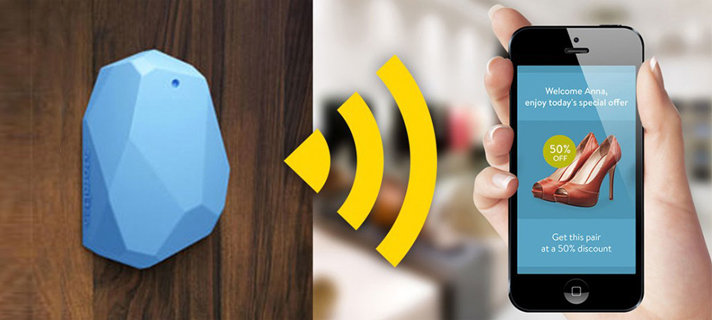
These beacons are Bluetooth devices that communicate with prospective customers’ smartphone in the hopes of improving their in-store shopping experience. The automated messages are sent through these beacons based on shopper’s location in the store and other relevant factors.
When installed in a store, beacons detect smartphones in its proximity and send messages such as discount coupons, adverts or even product information. Furthermore, the beacons can collect information on those consumers based on their movement in the store.
Why do retailers want to use it?
There are multiple projected benefits of the beacon technology – three to be precise.
First of all, they enable retailers to send location-specific messages to consumers in real time. For example, a prospective customer is in-store, looking at particular type of product, beacon can send that product related information or discount message to that customer’s mobile. It’s about ‘hit iron while its hot’ – once consumer has left an aisle, it is likely that he/she will buy the product online or from another store. With direct messages, beacon helps convert dead leads into sales.
Now that leads us to the second benefit which is data collection, analytics and insights. Beacons can send messages based on individual’s shopping pattern and preferences. For example, you can offer first-time visitors welcome loyalty points just for visiting the store. Similarly, you can offer bonus loyalty points to your loyal customers!
Last but not least, your employees can use data from beacons to hike up customer service levels. For example, beacons can help employees find out if they are talking to a first timer or a loyal customer. Your store staff can attend to a customer and provide tailored advise based on customer’s purchase history, brand preferences and so on.
Use Hike point of sale system with your in-store beacon technology to consolidate online shopping history with in-store data to get a clear understanding of your business.
What’s in it for customers?
Most of us don’t like mobile ads. Our phones being mini computers these days, we’ve already got a lot on it and advertising is probably the last thing we want there. However, good thing about in-store messaging and ads through beacon is that they are relevant to time, place and activity. Beacons deliver content on a very precise scale.
There are many scenarios in which beacon messaging are useful. For example, direction to my preferred aisle when I walk into a new branch of my favourite store, or recognise me as a returning customer and offer some discount as I walk in. With this, we won’t need to carry discount coupons!
What’s the catch?
The beacon technology is new and the biggest hurdle is to take customers on board. For beacons to work, consumers have to have that store’s app downloaded on their phone and have it open when they walk in the store and need to make sure that phone’s Bluetooth is on. Now, that’s so many steps just to be able to have a business serve you a notification about a sale on shirts.
In conclusion, the beacon technology is in its infant stage and like every other technology it has its downsides. However, from the outlook it appears to be promising. Hopefully, as the users grow and technology matures, a solution to the problems will surface automatically.